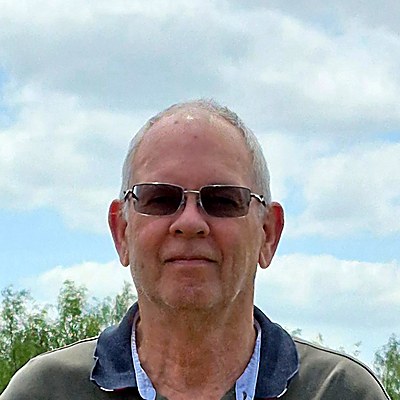
James M. Wilkinson, Ph.D., P.G.
Senior Hydrogeologist
The work behind this calculator spans more than two decades.
It began at the U.S. Geological Survey, where groundwater modeling of the Portland Basin aquifer system raised a question that proved stubbornly difficult to answer: how do you reliably estimate effective porosity — a fundamental aquifer property — without breaking the budget or the schedule?
Laboratory grain-size analysis and tracer studies can yield defensible results, but they are expensive, time-consuming, and in many field settings simply not practical. For the vast majority of the world’s water wells, that data never gets collected.
Specific capacity — the ratio of well yield to drawdown — is different. It is recorded routinely during well construction at no additional cost, stored in accessible databases in most countries around the world, and almost universally overlooked as a source of porosity information.
The Wilkinson equation changes that. Calibrated on Portland Basin well data and externally validated on well databases in Texas, Canada, Brazil, and several African countries, it produces reliable effective porosity estimates in seconds, from data that already exists. It requires no additional field work, no laboratory analysis, and no specialized equipment.
The method is not limited to a single geology. Wherever there are water wells, there is specific capacity data — and wherever there is specific capacity data, this approach applies. The goal is to put a tool that was never available, directly into the hands of earth scientists and students everywhere, at the moment they need it.
Professional Experience
Subject Matter Specialist in:
- Hydrogeology
- Geology
- Environmental Quality
- Remediation
Recognition
Education
Publications
The effective-porosity research grew out of groundwater-flow modeling work at the U.S. Geological Survey, where estimating this property reliably first became a practical problem worth solving.
Journal Articles — Effective Porosity
Wilkinson, J.M. (in review). Title pending. Quarterly Journal of Engineering Geology and Hydrogeology. Citation and DOI will be added upon acceptance.
Wilkinson, J.M., 2025. Why Spend so Much Time and Money to Estimate Effective Porosity? GSA Abstracts with Programs, Vol. 57, No. 6. doi:10.1130/abs/2025AM-7697
Wilkinson, J., 2012. The Application and Revision of a New Relationship to Calculate Effective Porosity from Specific Capacity on a Well Database in the Pacific Northwest. Hydrological Research Letters, v. 6, pp. 98–103. doi:10.3178/hrl.6.98
Wilkinson, J. and Shikazono, N., 2012. A New Method to Calculate Effective Porosity based on Specific Capacity from Drillers’ Logs. International Journal of Applied Environmental Sciences, v. 7, no. 3, pp. 349–362.
Wilkinson, J. and Shikazono, N., 2012. Experimental Determination of Effective Porosity and Specific Capacity under Controlled Conditions in a Laboratory. International Journal of Applied Environmental Sciences, v. 7, no. 3, pp. 297–306.
McCarthy, K.A., McFarland, W.D., Wilkinson, J.M., and White, L.D., 1992. The Dynamic Relationship Between Ground Water and the Columbia River: using Deuterium and Oxygen-18 as Tracers. Journal of Hydrology, 135: p. 1–12. doi:10.1016/0022-1694(92)90078-A
USGS Groundwater-Flow Research — Origins of the Ne Question
Snyder, D.T., Wilkinson, J.M., and Orzol, L.L., 1998. Use of a Ground-Water Flow Model with Particle Tracking to Evaluate Aquifer Vulnerability, Clark County, Washington. USGS Water Supply Paper 2488, 63 p. doi:10.3133/wsp2488
Snyder, D.T., Wilkinson, J.M., and Orzol, L.L., 1996. Use of a Ground-Water Flow Model with Particle Tracking to Evaluate Aquifer Vulnerability, Clark County, Washington. USGS Open-File Report 96-328, 71 p. doi:10.3133/ofr96328
Swanson, R.D., McFarland, W.D., Gonthier, J.B., and Wilkinson, J.M., 1993. A Description of Hydrogeologic Units in the Portland Basin, Oregon and Washington. USGS Water-Resources Investigations Report 90-4196, 56 p. doi:10.3133/wri904196
Presentations & Posters
- Wilkinson, J., 2012. Current and future field methods in hydrogeologic investigations. Symposium on the Past, Present, and Future Geological Resources, University of Tokyo, May 26, 2012. Oral Presentation.
- Wilkinson, J., and Shikazono, N., 2012. Application of a New Relationship between Effective Porosity and Specific Capacity on a Hypothetical Aquifer System. Japan Geoscience Union Annual Meeting, May 20–25, 2012. Abstract, Paper, Poster, Oral Presentation.
- Wilkinson, J., and Shikazono, N., 2012. An Evaluation of a New Relationship between Effective Porosity and Specific Capacity. American Applied Sciences Research Institute Conference on Environmental Management and Engineering, November 26–27, 2011, Wuhan, China. Abstract, Paper, and Oral Presentation.
- Wilkinson, J.M., and Shikazono, N., 2011. The Relationship between Specific Capacity and Porosity. Groundwater: Cities, Suburbs, and Growth Areas — Remedying the Past/Managing for the Future, National Groundwater Association, August 8–9, 2011, Los Angeles. Abstract and Oral Presentation.
- Wilkinson, J., 2011. Water Supplies: Evaluating and Developing Groundwater as a Source for Potable and Non-Potable Sources in Disaster Stricken Areas. International Symposium on the Strategic Program for Fostering Environmental Innovators in Asia and Africa 2011, Tokyo, December 16–17, 2011. Poster and Abstract.
Abstracts
- Snyder, D.T., Wilkinson, J.M., and Orzol, L.O., 1994. Use of a Ground-Water Model with Particle Tracking to Evaluate Ground-Water Vulnerability, in Lawson, C.A., and Bennett, P.C., Abstract — Scientific Visualization Workshop, Menlo Park, California, September 15–17, 1993, USGS Open-File Report 94-134, p. 13.
- Snyder, D.T., and Wilkinson, J.M., 1992. Use of a Ground-Water Flow Model with Particle Tracking to Evaluate Aquifer Vulnerability. EOS, Transactions, 1992 Fall Meeting, AGU, October 1992, p. 217. Abstract.
Beyond the Work
Worked In
United States, Japan, South Korea, Germany, Greenland, Eswatini (formerly Swaziland), South Africa, Madagascar, Sri Lanka, Cambodia, Guatemala, El Salvador
Lived In
Oregon, California, Japan, Utah, Alaska, Nevada, Texas
Also Visited
Bahamas, France, Italy, Canada, Mexico, Thailand, Singapore, Indonesia
Research Interests
Seismic and volcanic energy along plate boundaries, fluid movement through porous media, and a never-ending scientific curiosity.
Personal
Married with three adult children. Family history and genealogy research. Collector of stamps and coins.